Quick answer
To decorate an L-shaped living room, give each wing a main purpose and keep the inside turn available to connect them. Position the sofa and table around windows, doors and daily activities. Draw the actual outline and test the routes before filling the corner with furniture. A clearly defined zone should remain easy to reach.
1. Mark both wings and the openings
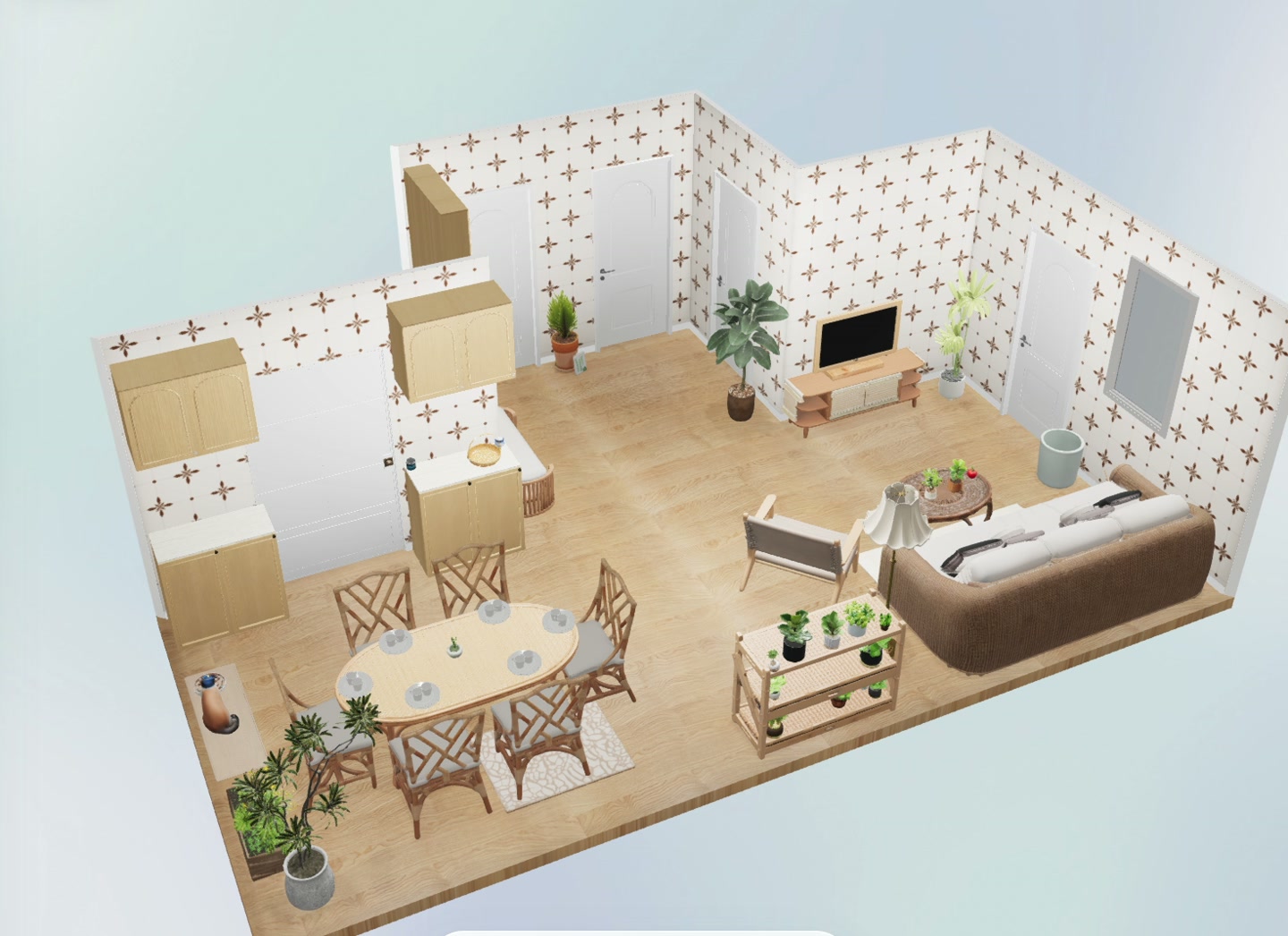
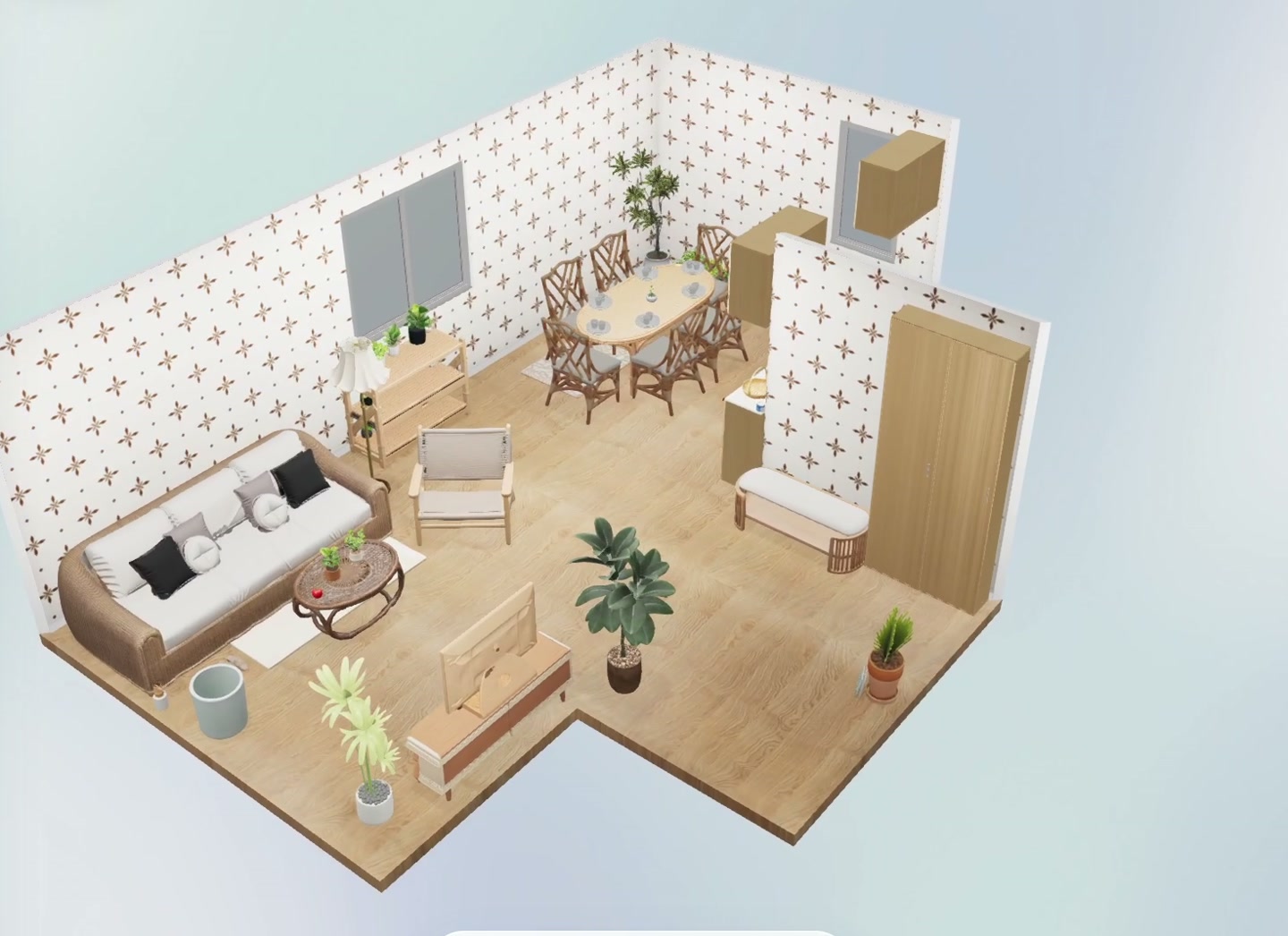
Measure each stretch of wall and the depth of the recess. Mark doors, windows and sockets on your sketch, then check the model in SenHOME Web. The screenshots show a general living and dining room example to help you observe uses and routes. Use the measured outline of your own home to decide which proposal fits.
2. Give each wing an activity
Try placing the living area where you can watch TV or talk without routes running through the seating group. In the other wing, consider dining, reading or working according to your routines and the available light. Position the largest pieces first. Add accessories after checking how to reach each seat and the storage furniture.
3. Check the inside turn
Follow the model’s routes from each door to the sofa and the second zone. Look at the point where the wings meet and check whether a sideboard, chair or table narrows the turn. Review it from the opposite direction too. You can use the corner for a shallow piece if there is still room to pass and use the furniture nearby.
4. Connect the zones and test real use
Repeat a wood finish or a textile colour to relate the two wings. If you use rugs, check their edges beside the routes and chairs. Mark furniture on the floor and try sitting down, carrying plates and opening doors. Use the guide to arranging an open-plan living and dining room to review how the activities connect before completing the decoration.