Quick answer
To arrange a small studio, keep a place to sleep, a usable surface for daytime activities and storage for the things you move. Choose the divider around the view from the entrance and the windows. Then test the change from day to night with the items you will actually use, before returning to the daytime arrangement.
1. Map your daytime and evening activities
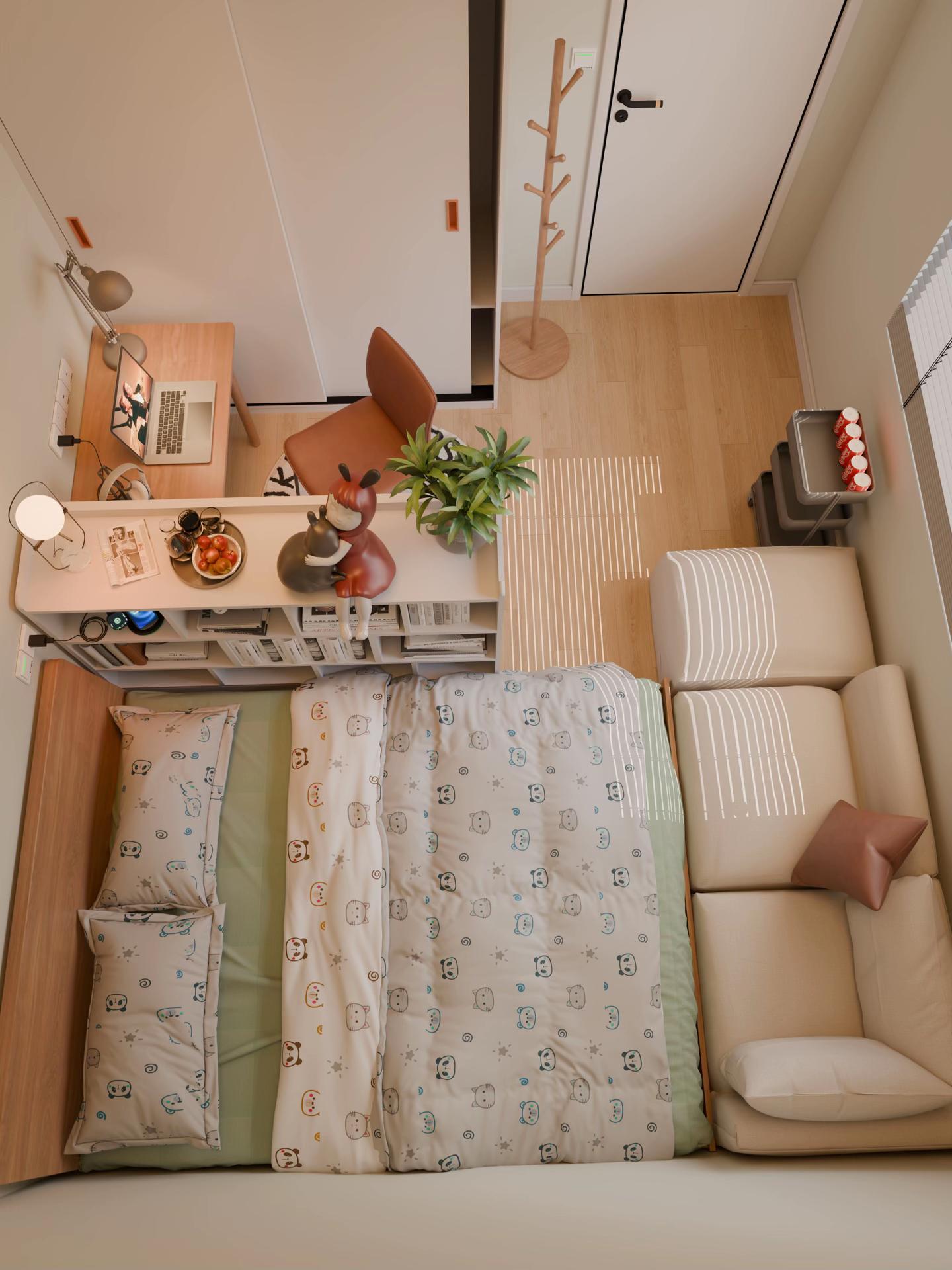
Record the outline, openings and furniture you will keep. Note where you eat, work, dress and sleep. For each activity, identify what stays in place and what needs storing. Open your room in SenHOME Web to examine furniture volumes. The images show demonstration bedrooms that help illustrate the relationship between bed, desk and storage.
2. Position the sleeping area and its visual boundary
Look from the entrance to see which part of the bed remains visible. Try the position of low storage, an open unit or a curtain according to your privacy needs. Check the stability and intended fixings of your chosen divider. Keep windows accessible and review the light from the desk and bed before choosing the separation.
3. Give transition items a place
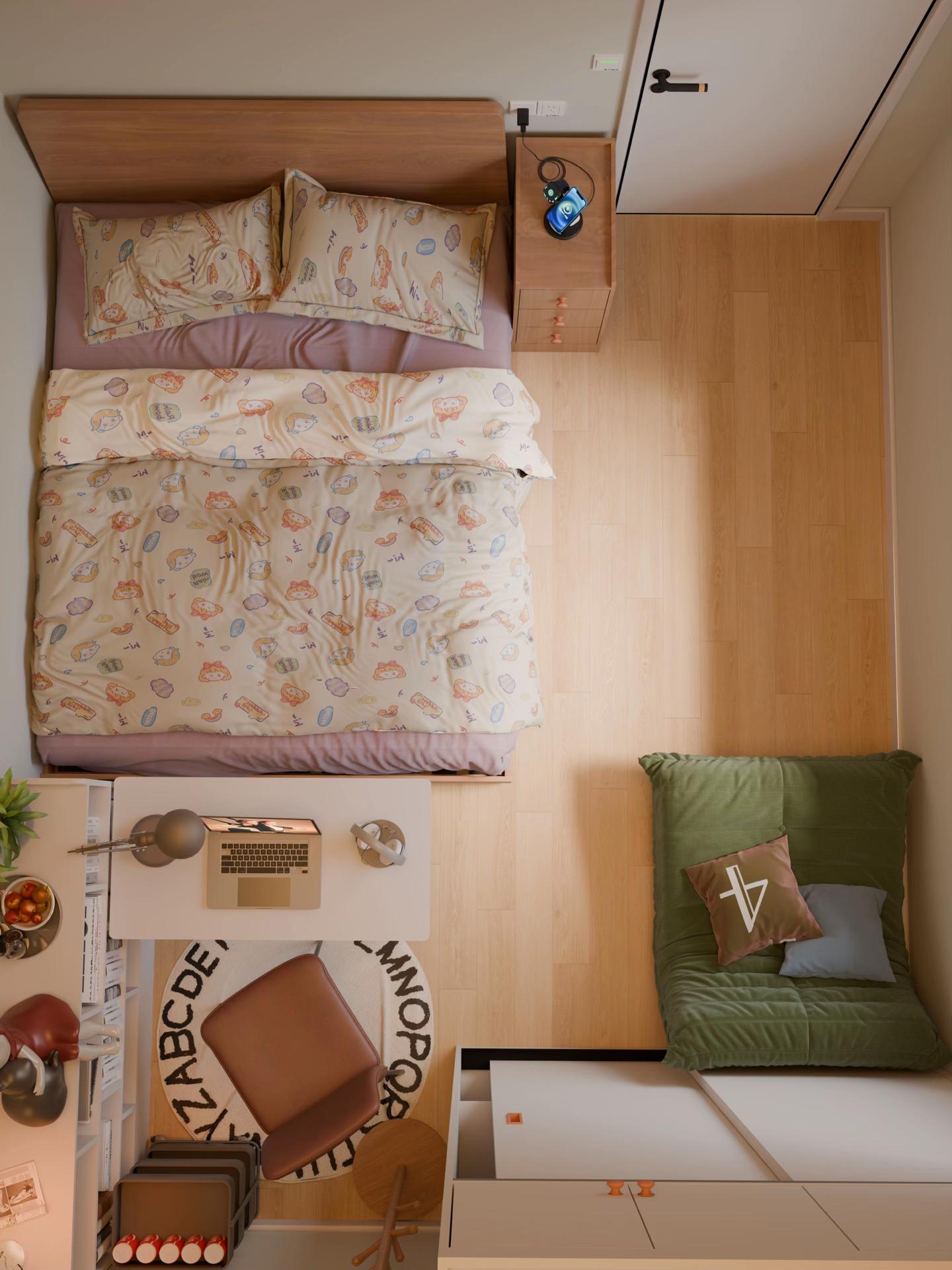
Assign a location for sheets, cushions, the computer and mealtime items. Keep the things needed for bedtime accessible while the work area is in use. Compare volumes in the model, then check doors and drawers at home. The second image presents another bedroom layout to help you think about the space around the bed.
4. Repeat a full cycle before buying
Prepare a meal, put work away, set up the bed and reach the storage as you would in the evening. Then return your things to their daytime places. Note each item that still lacks a home. Adjust the divider and storage, then repeat the cycle. The guide to organizing a small room helps you check light and retained furniture together.