Quick answer
To decorate a square living room, choose the focus you need first, such as a view, a television wall or a conversation area. Orient the sofa and other seats towards that activity. Leave some wall space clear while comparing the arrangement, then add storage once you know what needs storing. Check the result from each seat and the entrance.
1. Draw the outline and choose the main activity
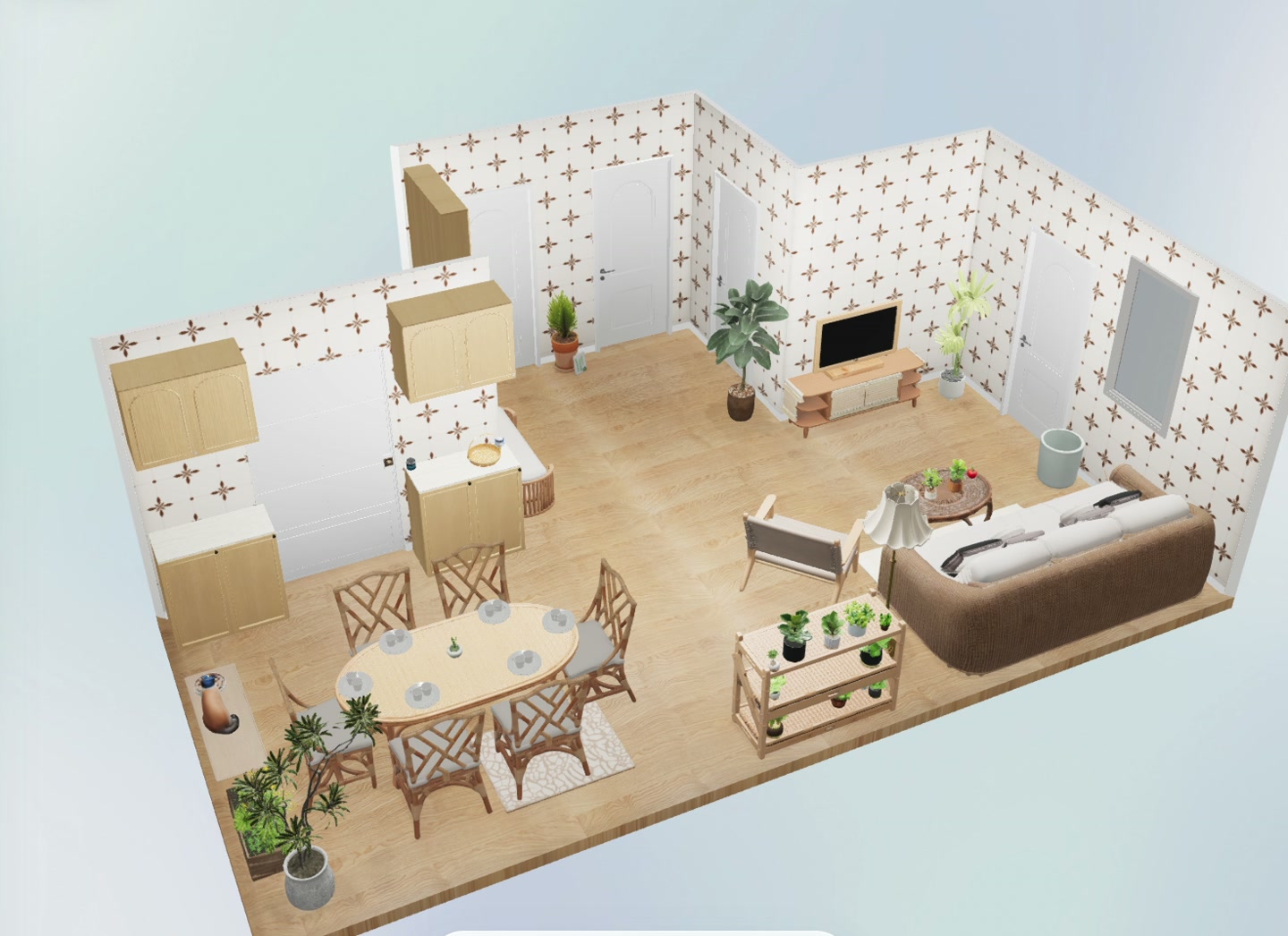
Measure each wall and mark doors, windows and furniture you will keep. Check whether openings or recesses change the usable shape. Write down what you do most in the room and what you would like to see when seated. Open your room in SenHOME Web to review volumes. The screenshots show a general reference living room for observing seats and walls.
2. Try a seating group before adding storage
Position the sofa and a second seat around your chosen activity. For conversation, test how you see each other; for television, check the viewing direction. Keep the same pieces and compare another orientation. Note which wall remains available in each option. You can then decide which furniture deserves that space and what can wait.
3. Look at the focus from every position
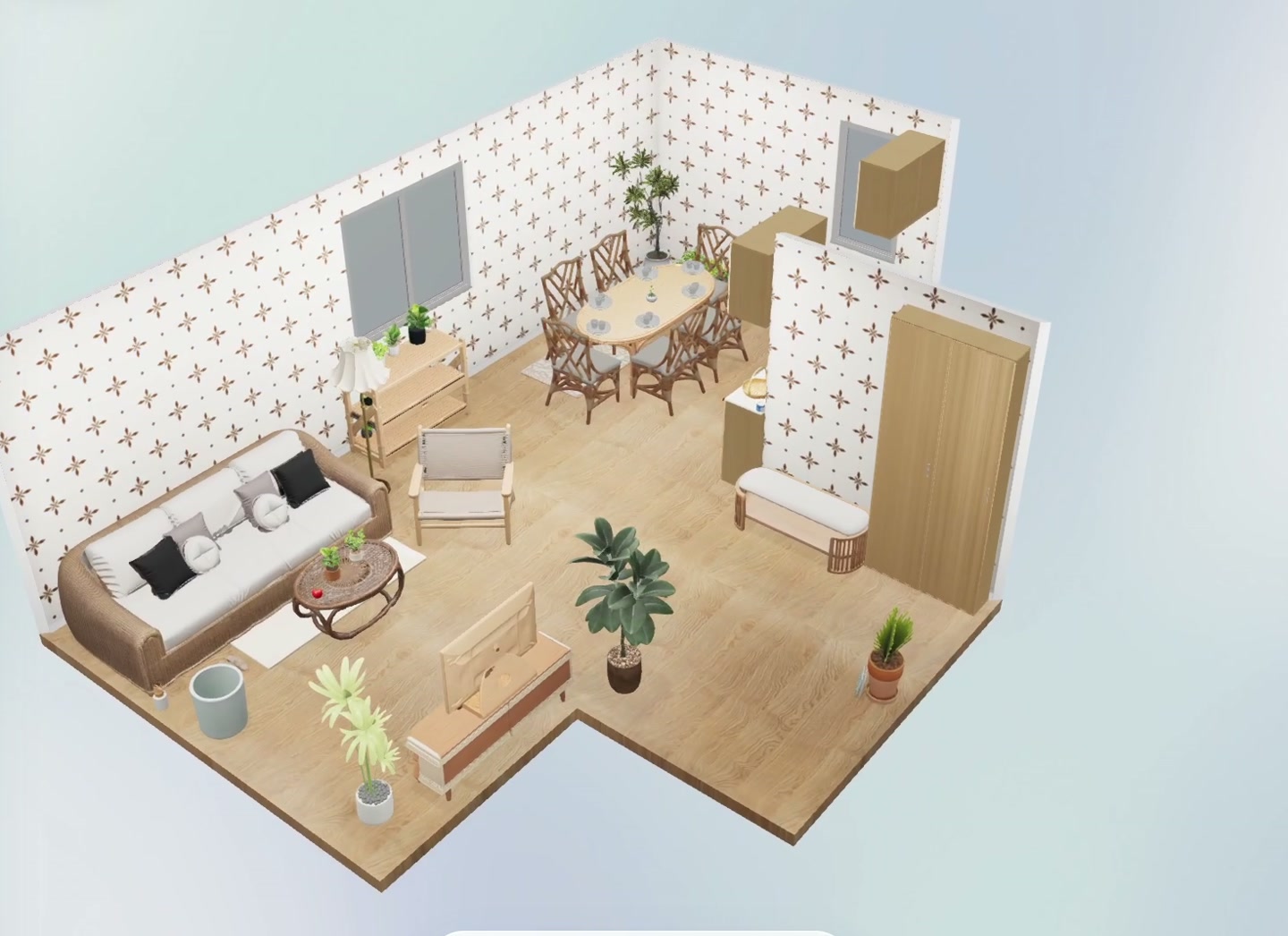
Review the proposal from the entrance and each usual seat. Look for a backrest, tall plant or table competing with your chosen feature. Check what appears behind the sofa too. The second example view shows another side of the same model to help explain those relationships. Changing the camera lets you observe the arrangement from another side.
4. Add what you need and test the room
Collect the objects you actually need to store and assign furniture to that need. Try one piece first, review the balance and preserve visible space around the seating group. Mark sofa, table and storage positions on the floor. Sit, stand and open drawers. The guide to choosing a style that suits your room helps coordinate the finishes you keep. Repeat the exercise with your usual evening lighting and check which element stands out.