Quick answer
Start decorating a child’s room by examining how play materials are taken out and put away afterwards. Choose the frequently used toys and actual containers, and mark the play floor and return locations together. With the caregiver, observe how the child currently takes things out and puts them in. Instead of deciding from the empty floor in a picture, go through a real play-and-tidying session.
1. List the things needed for one play session
Choose an activity the child normally does and gather what it uses. List items used together as a group, such as blocks with their baseplate or drawing tools with paper. Separate things taken out immediately from those added later. Record where opened boxes and finished creations remain to identify the space needed during play. First check that the list covers one complete activity, without adding materials for other activities all at once.
2. Choose retrieval positions using the actual containers
Measure the outside of the current containers and the part used to grip the handle. Observe where the child normally reaches for things and choose possible locations for frequently used groups. Even on equally low shelves, finding items at the back can differ. Check where the container goes temporarily once removed. Separately mark the space needed to open a lid or drawer and test again with the actual contents inside.
3. Mark both the spread-out activity and the space to pass
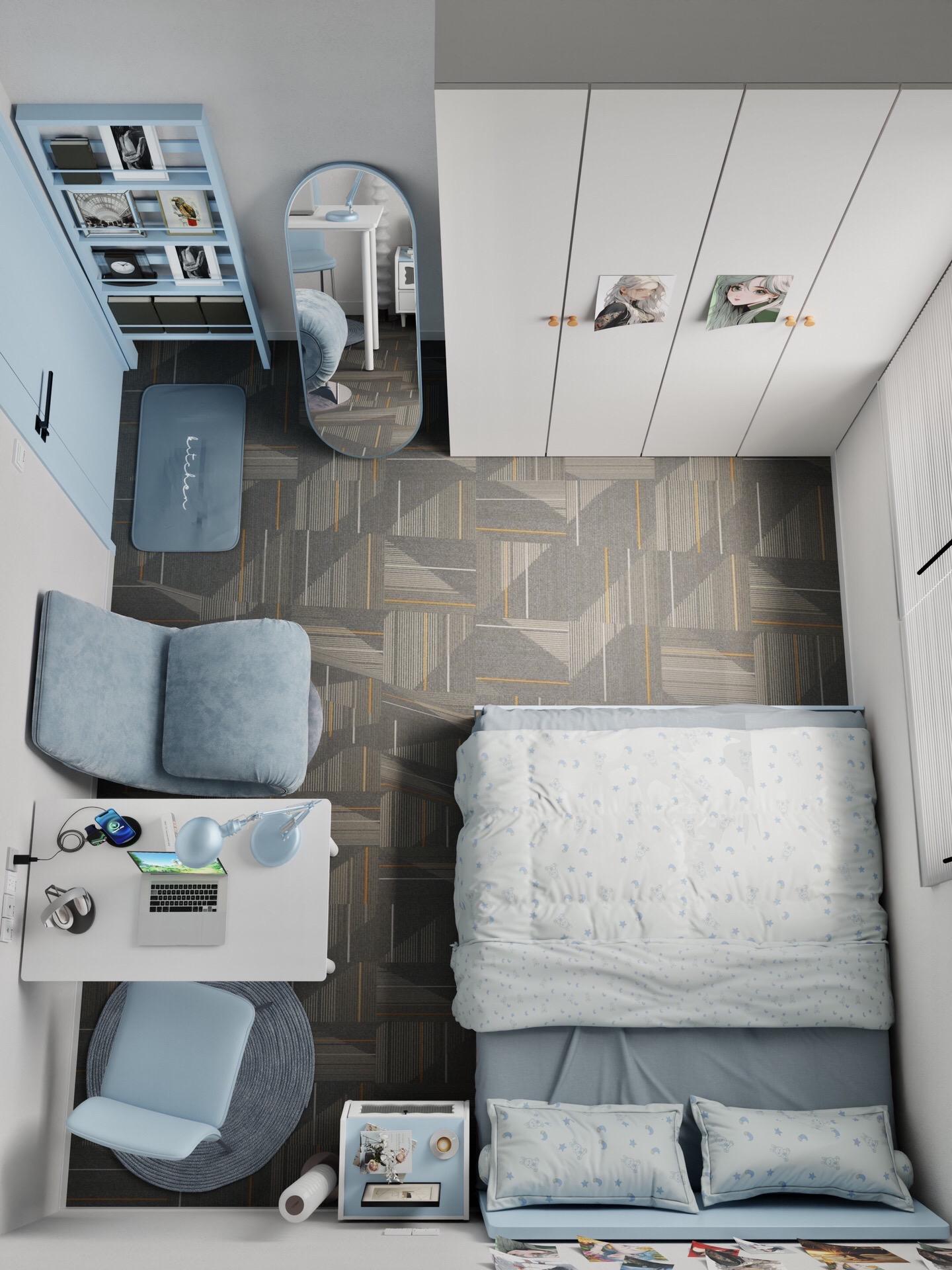
Spread the play materials as usual and see how much floor they occupy. Mark the puzzle board or block-box area on a sketch, along with the place to sit beside it and temporarily placed items. SenHOME Web lets you compare furniture with the empty floor. The product images here are general bedroom examples, not records of actual children’s play trials. Check on site whether the play area has to be repeatedly shifted while doors and storage are used.
4. Go through taking out, playing and tidying afterwards
The caregiver can observe the child’s usual activity to check taking out the required groups, playing and returning them. Note pieces left over during tidying or items mixed into another container. Check whether several containers must be emptied to find something, and whether there is nowhere for the lid. Compare dividing a group into containers or changing its location if it is hard to put away. Repeat the same activity at the new position to check what changed.
5. Leave recognisable location labels and a tidying order
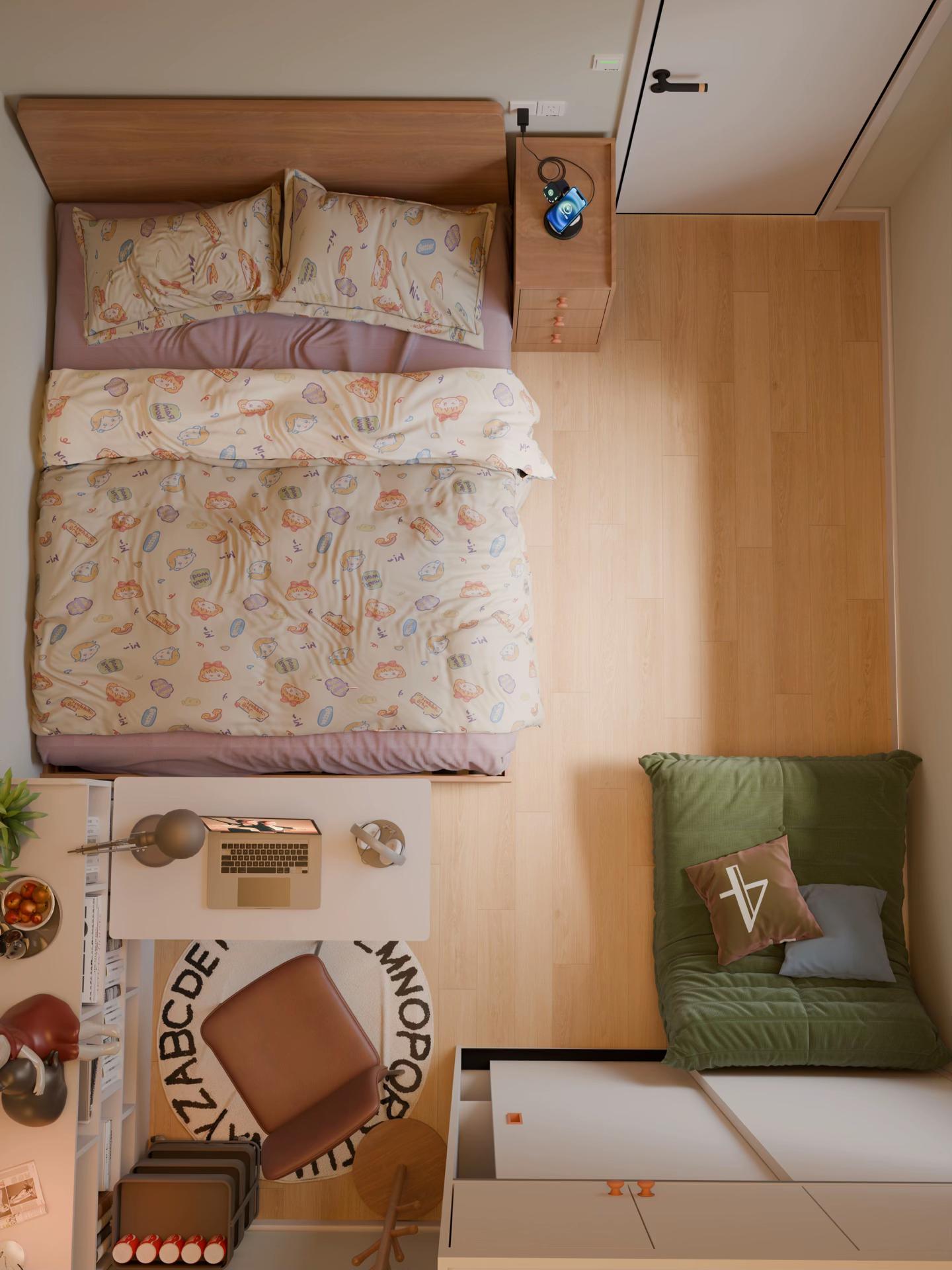
Decide on names or pictures for the contents of each container to match their actual storage locations. Record the items to collect first and the board or box to put away last when play ends. Check whether the same location can be found next time. For keeping furniture while considering storage and free space together, see the small-room decorating guide. Briefly record the chosen positions and changes to compare during the next tidy-up.