Quick answer
Japandi combines Japanese and Scandinavian influences. To explore it with existing furniture, choose a wood tone as your reference, compare quiet colours and textures beside it, and keep everyday storage practical. Test a small change against the original room before choosing physical samples. Use the room’s function and your retained furniture to guide each decision.
1. Identify the wood and furniture you will keep
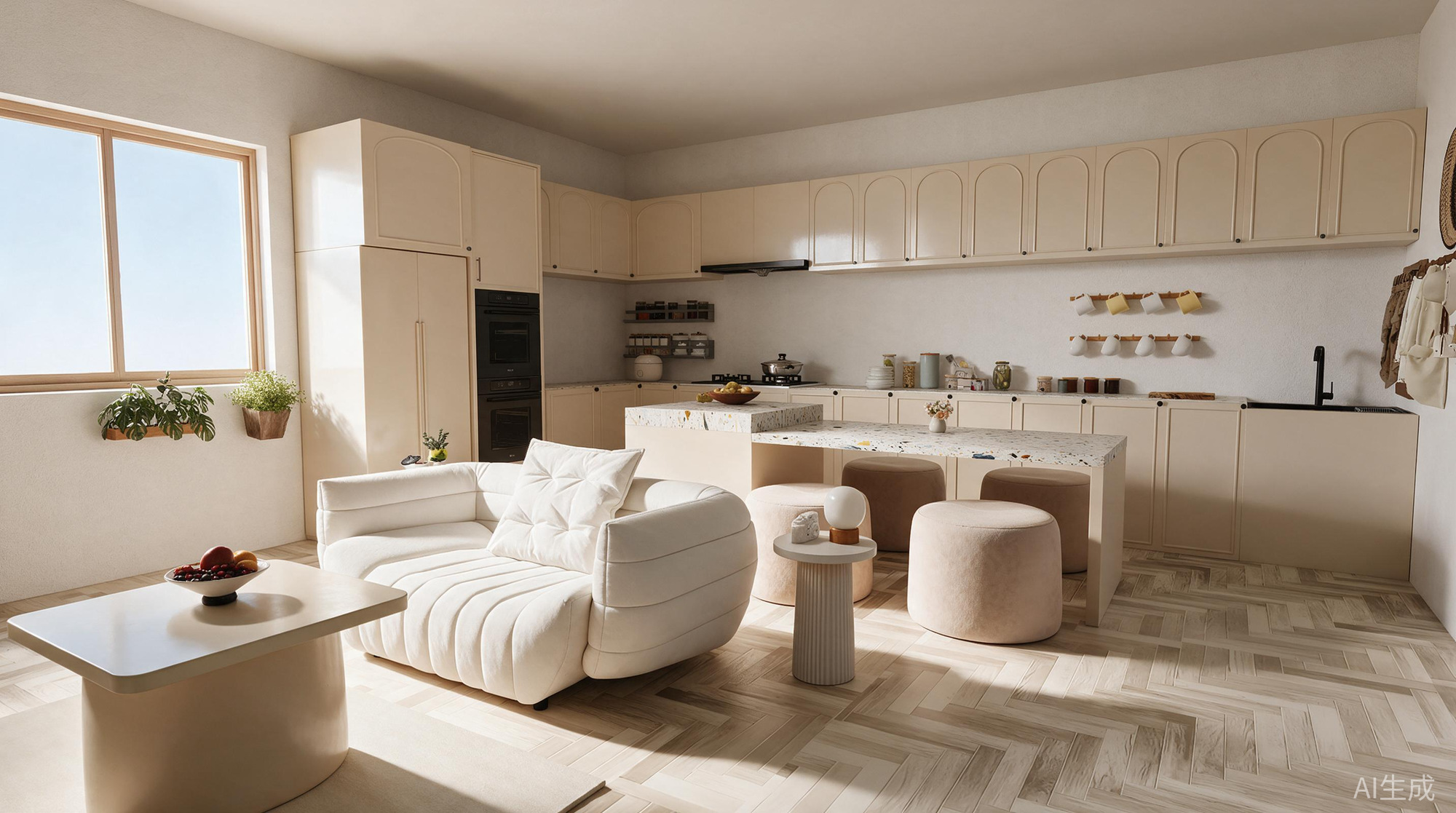
List the table, cabinets, seating and flooring that will stay. Look at them together in daylight and note which surfaces appear yellow, reddish, pale or dark. Choose the largest retained wood surface as a reference for the next comparison. Keep a photo and the measurements beside your notes. A darker cabinet can remain part of the scheme while nearby textiles and wall tones are tested around it.
2. Build a palette around that reference
Place a plain textile sample and a wall-colour sample beside the retained wood. Compare the undertones before adding another pattern. Try related colours with a small difference in lightness, then examine whether the furniture edges remain readable. Put the same samples beside the sofa as well as the cabinet. Write down which pairing works with both, including the room’s existing floor and window light.
3. Preview one finish and keep the comparison consistent
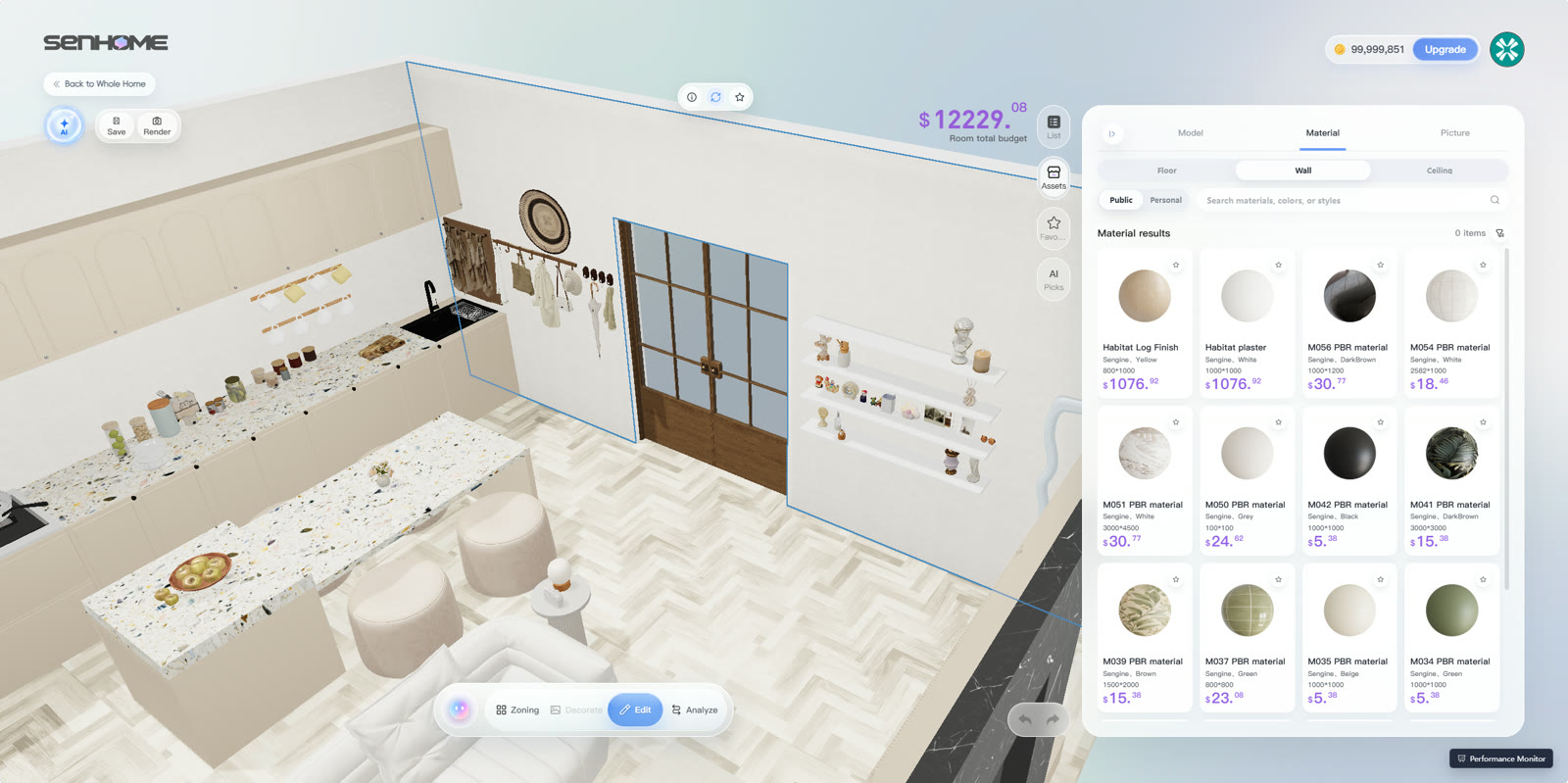
Open the room in SenHOME Web and check the retained furniture and openings. Select a surface and browse the Material library, using Wall for a wall-finish test. Compare a restrained finish with the original from the same viewpoint. Keep furniture positions fixed while examining the background. The screenshots supply general product references for this process. Judge the proposed combination using your own room and samples.
4. Check texture, storage and everyday use
Compare a fabric, a wood sample and the chosen wall colour together. Note which texture you want to notice first and which surfaces should provide a quieter background. Review open shelving and decide where daily objects will return after use. Keep access to doors, drawers and seating comfortable. Check the samples again in evening light and record the combination you prefer before ordering or changing a finish. Check the visible shelf edges and group the objects you actually use. Give chargers, books and other daily items a repeatable place to return.
For a closer look at restrained palettes and surfaces, see the guide to neutral colour and texture choices.