Quick answer
Industrial interior design takes cues from factory and warehouse materials. With existing furniture, start from the wood, metal and upholstered pieces you already have. Compare a limited dark accent with lighter surroundings, then balance the visible hard surfaces with textiles. Test each change in the room and keep the furniture comfortable to use.
1. Map the existing materials and useful pieces
List the metal frames, wooden tops, cabinets and fabric seats that will stay. Mark the parts you see most from the entrance and from your usual seat. Note the finish of each metal element and the tone of the wood beside it. Choose one existing item to anchor the comparison. A table frame or storage unit gives you a specific reference when deciding which surrounding surface to change.
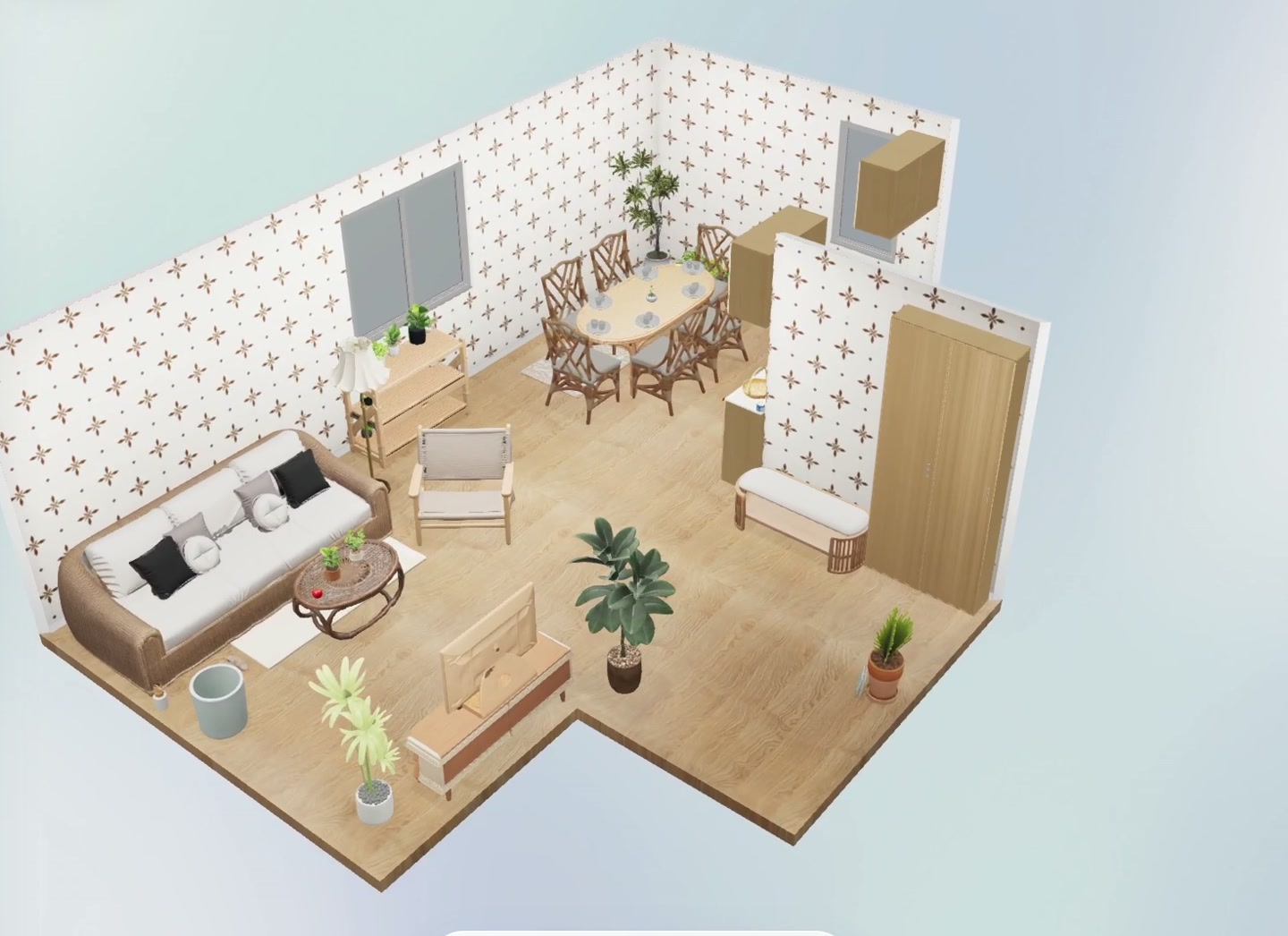
2. Test a dark accent against the original background
Choose a limited area to compare, such as the wall behind a retained cabinet. In SenHOME Web, select the surface and browse Material and Wall. Compare a darker sample with the original finish while keeping the camera and furniture positions consistent. Check the furniture outline from the entrance and from the seating area. Note where the contrast helps and where an edge becomes difficult to see.
3. Balance the materials with the textiles you use
Place a fabric sample beside the wood and metal finishes you intend to keep. Look at their colour, texture and sheen together. Compare the current cushion or curtain fabric with another option before changing larger surfaces. If the room feels visually heavy, review the area covered by the darkest finish and try a lighter surrounding tone. Keep the practical lighting and seating requirements in your notes.
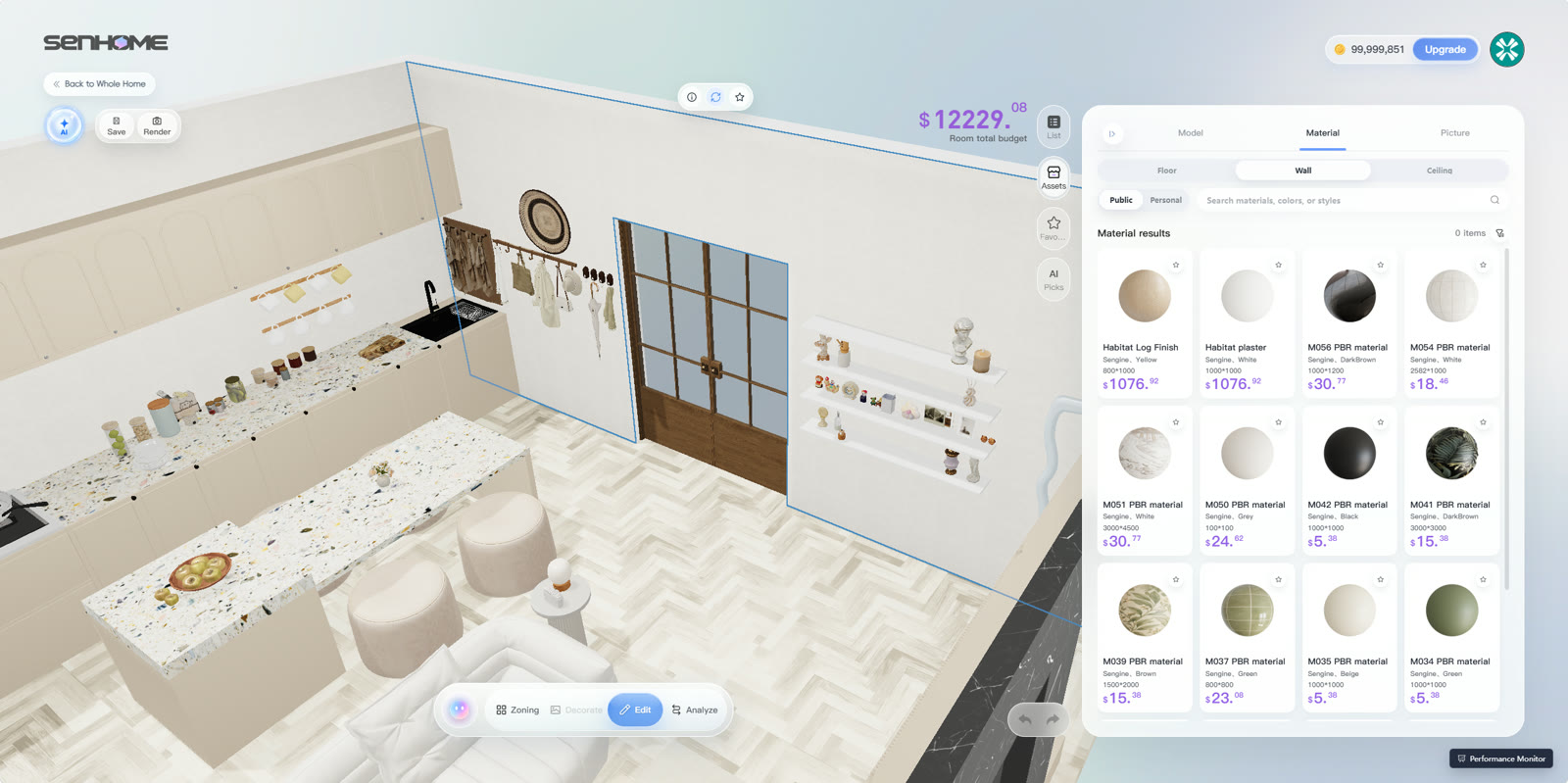
4. Check comfort and physical samples before deciding
Sit at the desk or sofa and check what the finish looks like at eye level. Inspect samples in daylight and evening light, including reflected highlights on metal. Test chair movement, storage openings and the route through the room. Record the preferred combination and which materials remain to be confirmed. If adding lighting or a fixed fitting, check the product requirements and installation with the appropriate supplier or professional. Check the view from each seat again with the samples beside your existing furniture. Keep notes on any glare or hard surface that distracts from the room’s intended use.
For further help with the size and position of a dark accent, read the guide to combining black with other interior colours.