Quick answer
Black works with warm white, beige, wood and muted greens, depending on the atmosphere you want. Start with one surface or a specific item and keep the colours you already have in view. To keep the room from feeling too dark, check how much of it is black, where light enters and how the sample looks by day and at night.
1. Choose where to introduce black
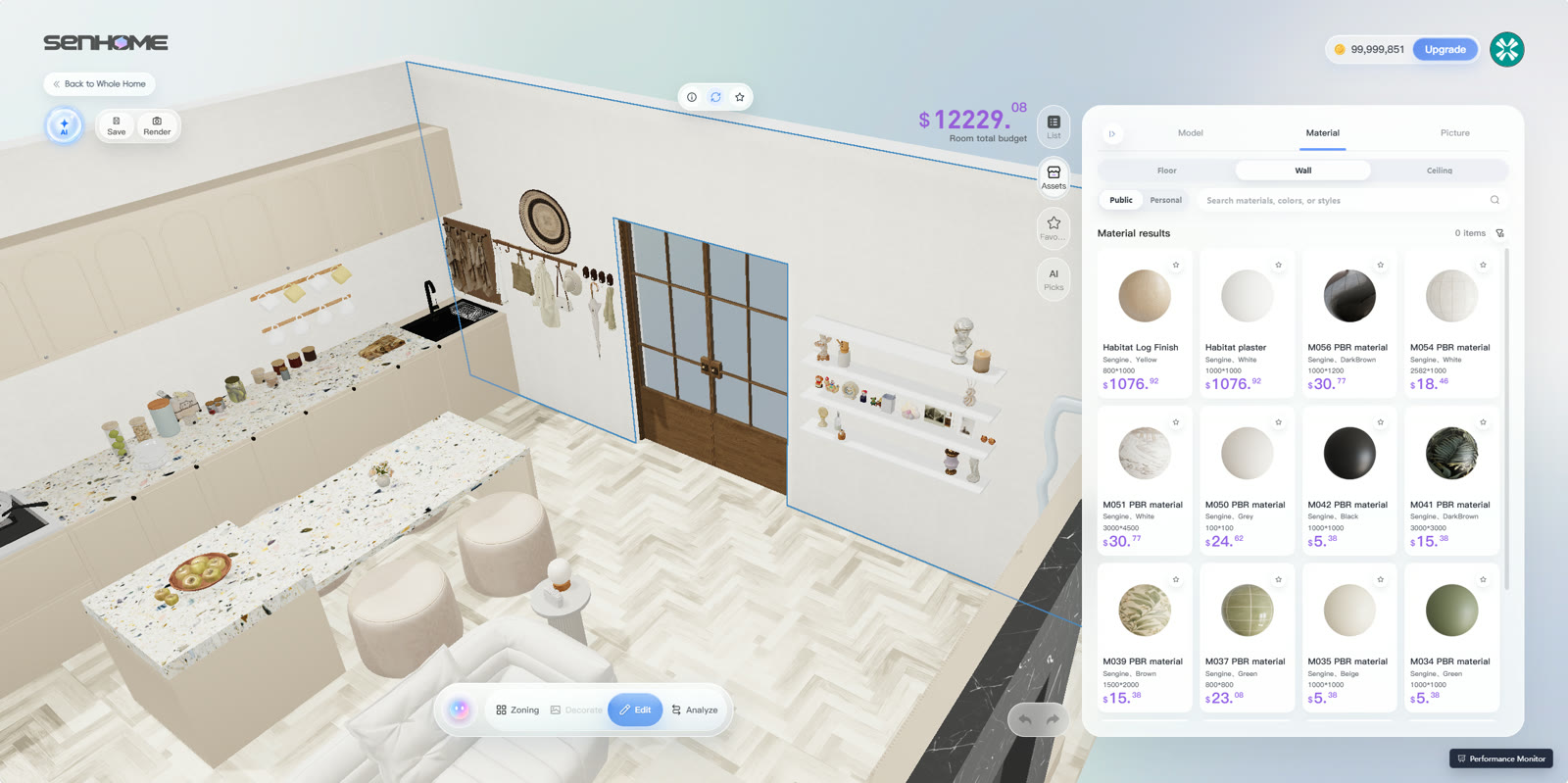
List the flooring, wall finishes and furniture you will keep. Choose a first use, such as cushions, a lamp or a wall, and decide where you will usually view it from. Review that area in SenHOME Web. The screenshot illustrates the material library and a selected wall, with the Material and Wall controls visible.
2. Compare black with a colour pairing
Try warm white and wood for a softer overall effect, beige to connect it with the textiles, or muted green to relate it to plants. Keep the same black area while comparing the options. Look at how the wall, floor and furniture meet. Choose a pairing that also suits the items you intend to keep.
3. Adjust the size of the dark accent
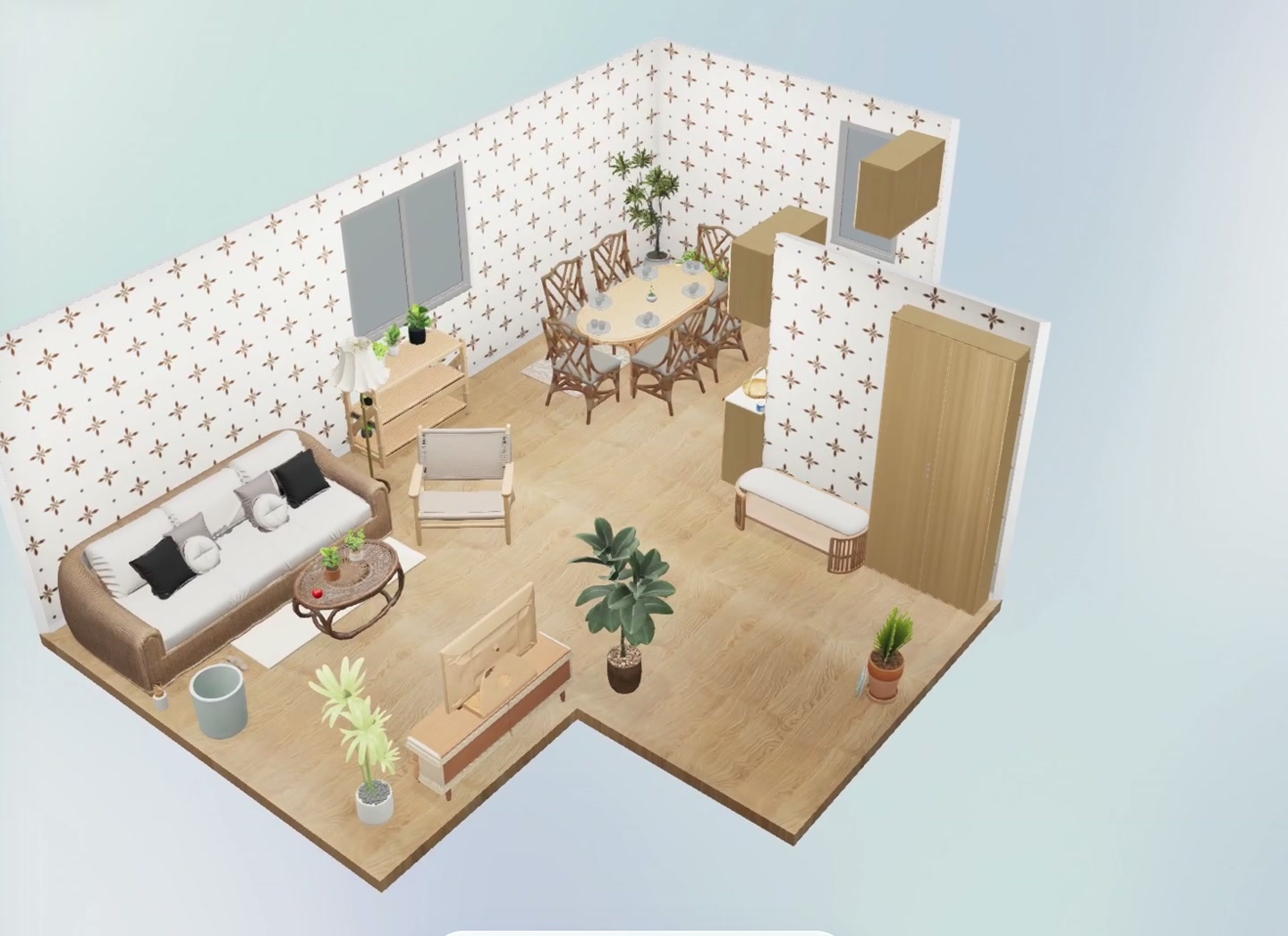
Start with a small piece and review the whole room from the entrance and from the seat. If you like the result, consider a larger surface. Check whether a curtain, tall cabinet or the piece itself covers part of the window. In the living room example, the dark cushions show how a small accent sits among light fabrics and wood.
4. Confirm colour and finish with physical samples
Place the sample beside the flooring and fabric that will stay in the room. Look at it near the window, in the darkest corner and with the lamps you use at night. Check gloss and texture too. Adjust the proposal using these observations, and use the guide to choosing a style that suits your room to keep the scheme coherent as you add more pieces.