Quick answer
Begin decorating a study by recreating how you actually read and write, before choosing only where a desk should stand. Open the book and notebook you normally use, then fetch the references you need and put them back. Separating what stays open from what you consult briefly clarifies the roles of desk and shelves. Check size and usability at your own desk; use the furniture arrangement on screen as a comparison afterwards.
1. Choose one regular reading and writing task
Gather an actual book or document, notebook and writing tools. If you normally use a laptop too, place it in the same area. Write down the sequence of reading, making notes, finding related references and returning to reading. Separate what remains open from what you take out briefly. Also record where each item goes when the task ends, so you can distinguish decorative objects from the things actually needed on the desk.
2. Open books and notebook to measure the working area
Open them on your current desk as usual and read a passage while making notes. Check whether you repeatedly move things to turn a page or shift the notebook. Mark where you pick up frequently used pens and temporarily place references. Measure the spread when open, rather than only the closed book’s width, and record what feels awkward to the user. Avoid assuming that a desk shown on screen fits your actual belongings.
3. Separate active references from stored materials
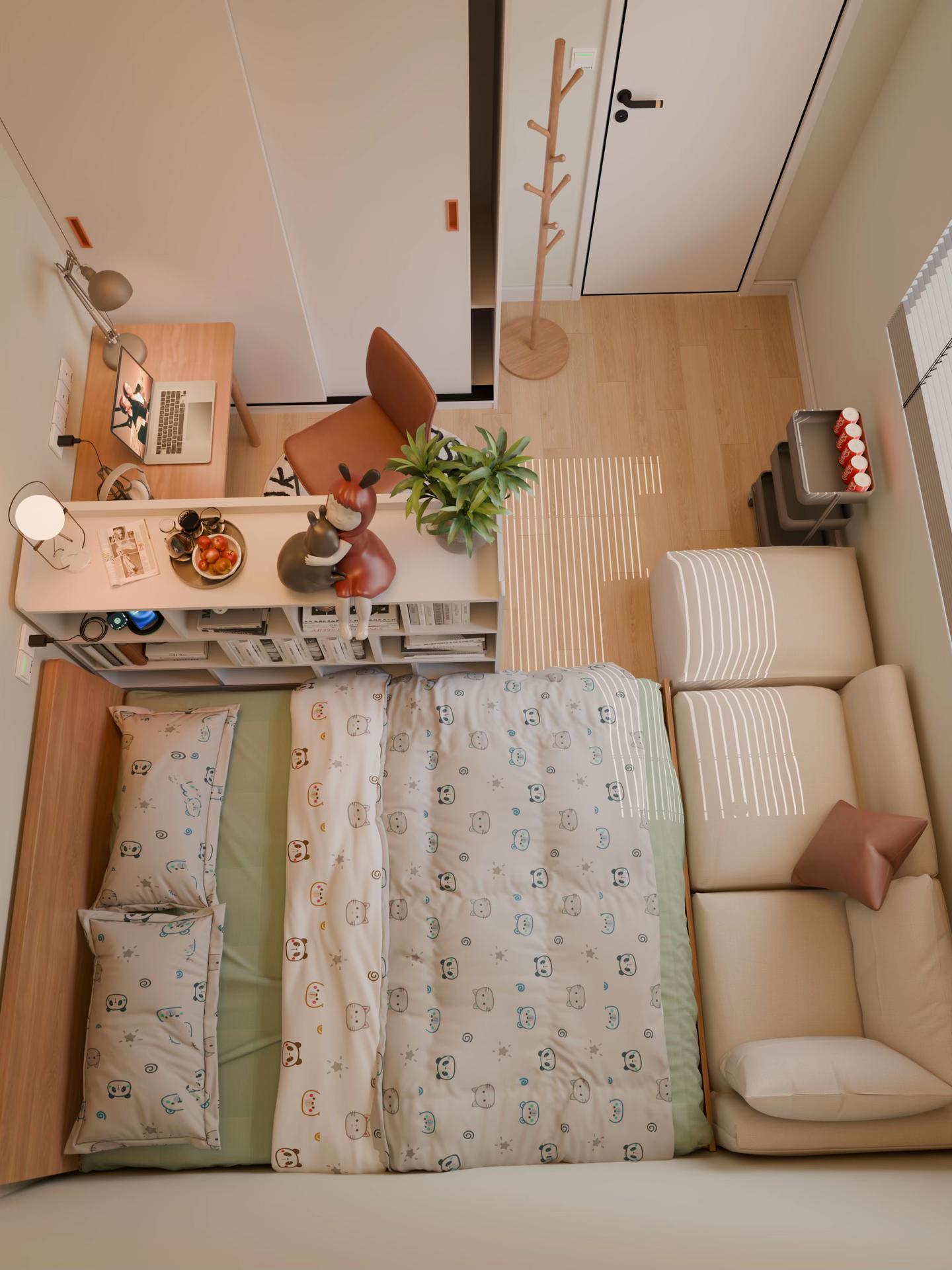
Group books and files for the current task, distinguishing frequent references from completed materials. Put real books or binders on the shelf and take them out to check the depth and space to grip them. If finding a reference requires moving everything else, change the grouping or location. Record the connection between the desk area for opening materials and their return shelf, and check whether infrequently used references repeatedly occupy the work surface.
4. Compare desk and shelf positions using the same task list
Use SenHOME Web to view furniture relationships and compare desk and shelf positions with your measurements. The examples are general bedroom models, not screens automatically verifying shelf interiors or reading movements. On the sketch, mark where you fetch materials and reopen them on the desk for each option. Test pulling out the chair, standing and returning to sit with a book in the actual space. Using the same items and sequence makes differences between positions easier to see.
5. Finish a short task and put everything away again
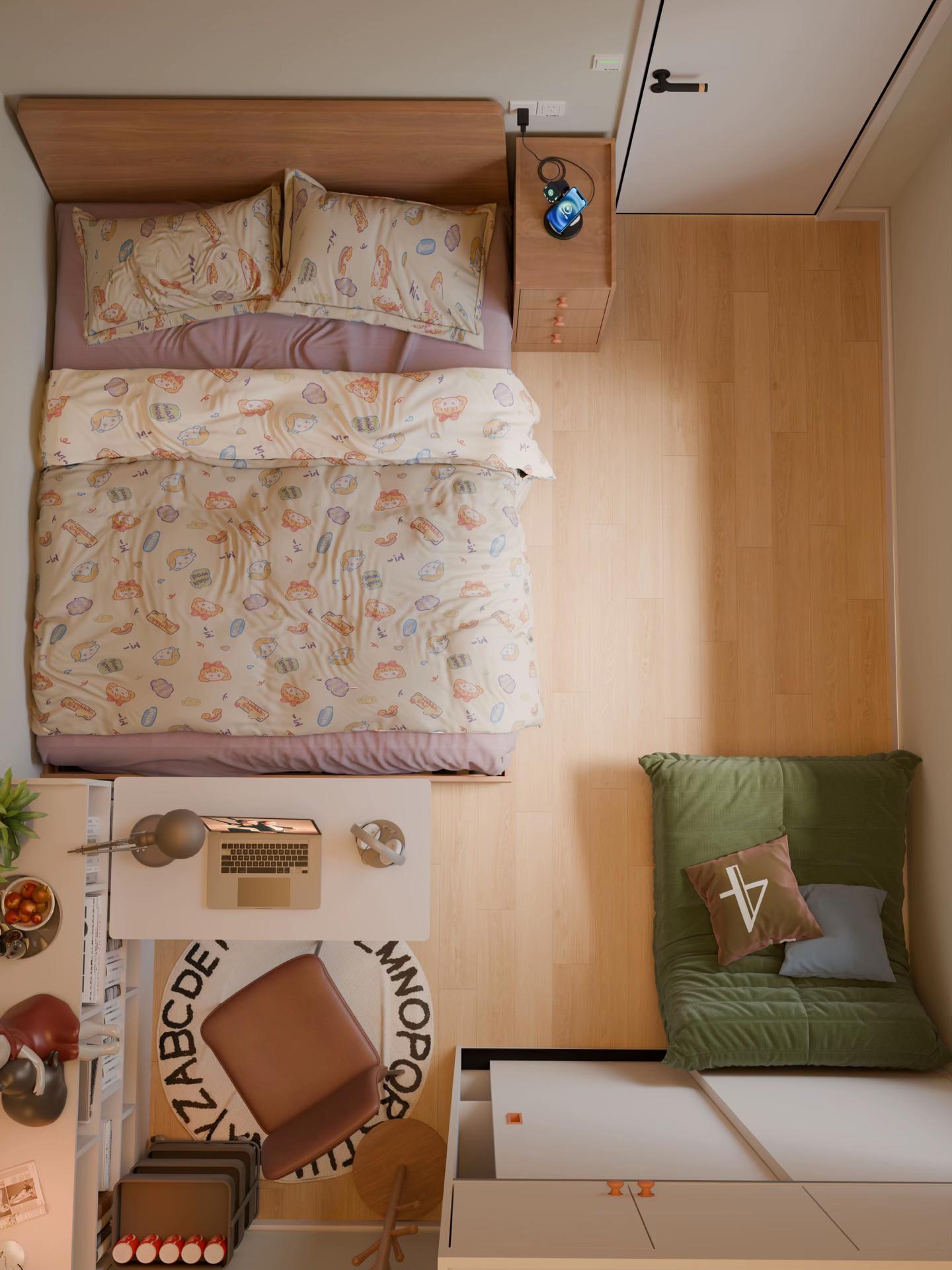
Go through reading, note-taking, finding references and returning them in the chosen position. Record objects that make you get up repeatedly and materials left on the desk. Check the brightness and usability you experience there and compare another option. The bed-and-desk layout comparison shows positions within the same room. Keep that example as a reference, and choose desk and material locations according to how easily you can finish and restart your own work.