Quick answer
Mid-century modern interior design combines practical furniture with clear outlines and sculptural curves. Start with a piece you will keep, then compare the shape of one neighbouring item. Look at its back, arms, base and overall bulk before choosing finishes. Check the combination from everyday viewpoints and test its footprint in the room. A useful starting point can be a familiar sofa or cabinet.
1. Describe the outlines of the pieces that stay
Photograph your retained furniture from the front and side. Trace the main outlines on paper: a rectangular cabinet, a curved chair back or a sofa with broad arms. Mark whether each base reaches the floor or leaves space beneath it. Keep actual width, depth and height with the notes. This gives you specific features to compare when looking at another piece.
2. Compare one candidate shape with the retained furniture
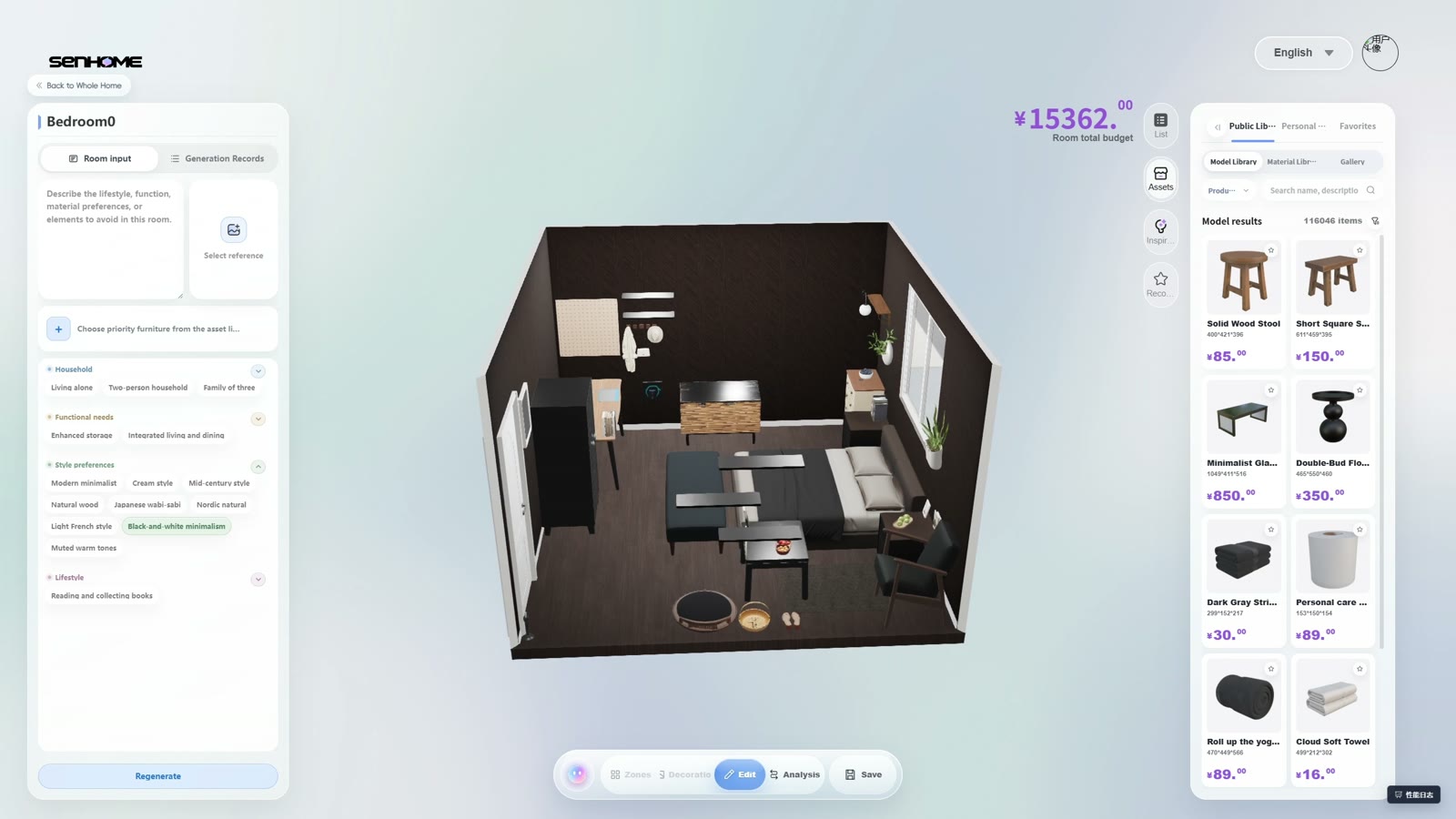
Open your room in SenHOME Web and inspect the main pieces together. When browsing a candidate, compare a straight edge with a curved back, or a solid-looking base with visible legs. Change one candidate at a time so you can identify its contribution. Judge the model you actually see; check its dimensions separately against the real item you would use.
3. Check visual weight from more than one position
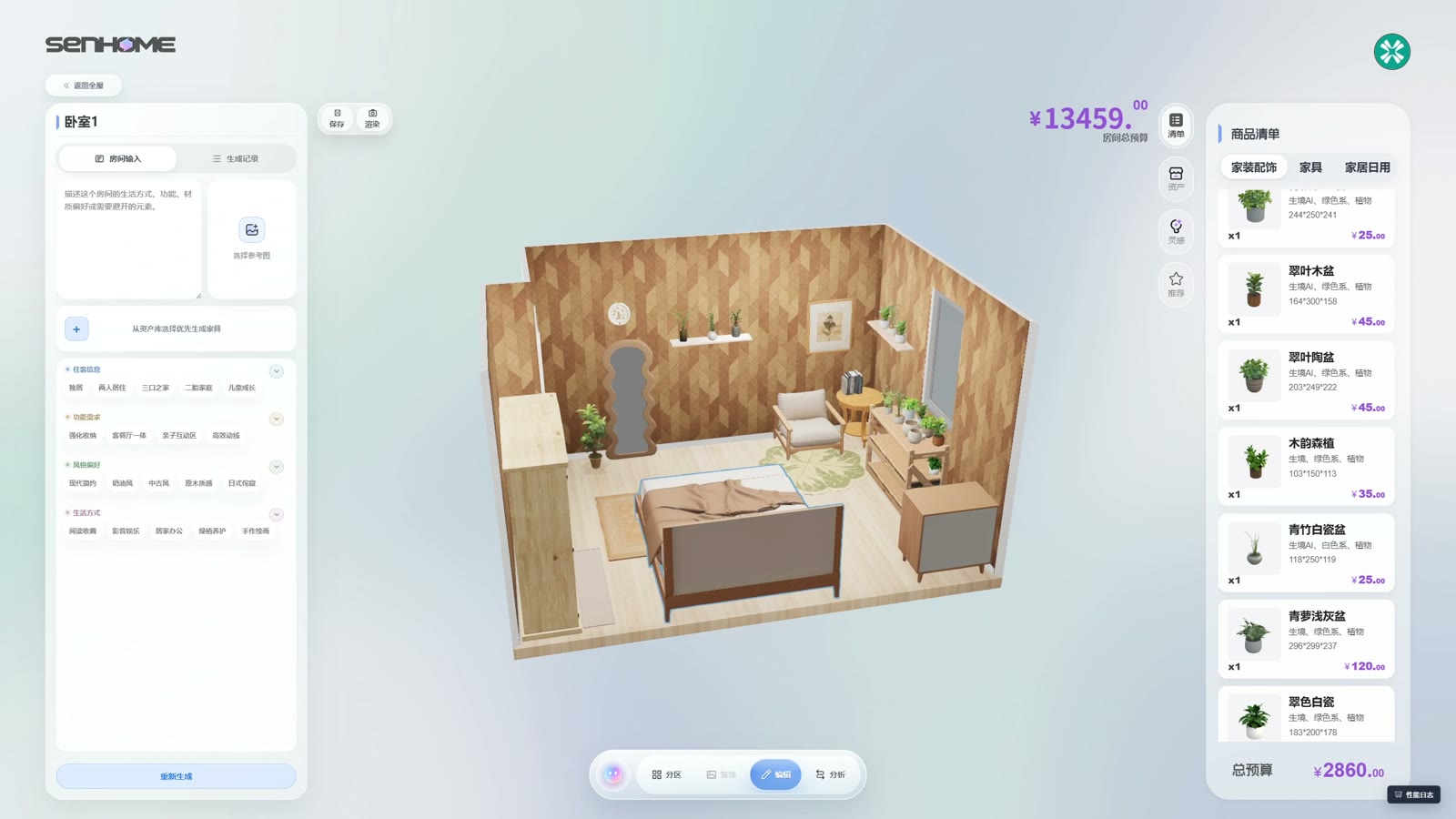
Look from the entrance, your usual seat and beside the furniture. Notice where a high back hides another piece or a broad arm makes the group look crowded. Compare the amount of floor visible below each item without assuming that a lighter appearance means a smaller footprint. The second product image shows furniture with different outlines in a general bedroom. Use those visible relationships as observation practice.
4. Test the useful combination in the actual room
Mark a proposed piece’s footprint on the floor, then sit, stand and reach the nearby storage. Check that the preferred outline also works during use. Place wood and upholstery samples beside the retained furniture after settling the shape. Record which item stays, which candidate you prefer and what remains to measure. The guide to choosing a style for your room helps connect those observations to your original room brief.